Riemann Hypothesis
Levent Alpöge has published a proof of the Riemann hypothesis, found with the AI model Claude and formalized in Lean. The Lean community confirms it, and a version over 200 times shorter is also checked. As of November 27, 2026.
Also available in: Deutsch
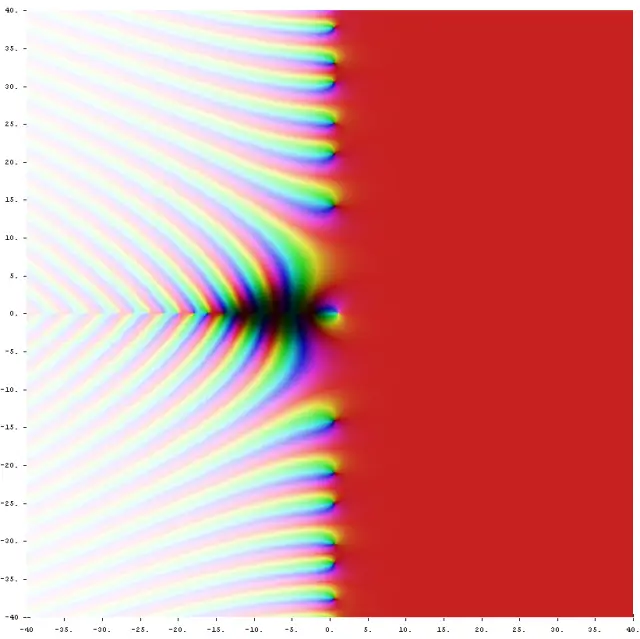
The Riemann hypothesis is probably the most famous open question in mathematics. It says that all the interesting zeros of one particular function lie on a single straight line, and that fact would tell us how evenly the prime numbers are spread out. On November 20, 2026, the mathematician Levent Alpöge presented a proof. Alpöge works at the AI company Anthropic and says he found it together with the AI model Claude. It does not exist as a paper but as a complete formalization in the proof assistant Lean, about 17 million lines of code. On November 21, the Lean and Mathlib communities confirmed that the statement and the proof are correct.
Experts call it a historic moment, but they stress that the proof still has to be understood. Alpöge has not yet published a readable version, and explanations by other mathematicians are only now appearing. On November 25 a much shorter Lean version of about 76,000 lines followed, which independent checkers at MIT and the University of Waterloo confirmed the next day. There is no review in a journal, and the Clay Mathematics Institute still lists the problem as unsolved. A German version of this article is Riemannsche Vermutung: Beweis mit KI vorgelegt und in Lean geprüft (in German).
What is the Riemann hypothesis?
In 1859, Bernhard Riemann studied a function that now bears his name, the zeta function ζ(s) = 1 + 1/2s + 1/3s + …, extended to complex numbers s. The function has two kinds of zeros. The “trivial” zeros are the negative even numbers −2, −4, −6 and so on. All the others, the nontrivial zeros, lie in a vertical strip of the complex plane. Riemann conjectured that every one of them lies on a single line, the critical line with real part Re(s) = 1/2. Computers have checked this for trillions of zeros, but a proof was missing for 167 years.
The zeros matter because they control the prime numbers. The prime number theorem says that the number of primes up to x is roughly x divided by the natural logarithm of x. If the Riemann hypothesis is true, the actual count differs from the best smooth estimate by only about the square root of x. That is as small as the error can possibly be. Hundreds of theorems in number theory have so far been proved under the assumption that the hypothesis holds.
The weaker “quasi-Riemann hypothesis” of October 2026 is explained in the German article KI beweist die Quasi-Riemann-Vermutung (in German).
What Alpöge presented
Alpöge’s note is only four pages long. In it he writes, in essence, that he believes he has found a proof of the Riemann hypothesis together with Claude. The method goes further, he says, and also settles the generalized Riemann hypothesis. He thinks the even stronger extended hypothesis is reachable with more time.
He deliberately released the actual proof only as Lean code. An automatically generated text version would be easy to produce but unreadable: according to a footnote in the note, one attempt came to more than 250,000 pages. Alpöge announces that he will work to understand the argument, simplify it and write it up properly. He expects much shorter proofs soon.
The note gives only hints about the idea. The proof descends from a method with which Sergei Stepanov, starting in 1969, proved the Riemann hypothesis for curves over finite fields by elementary means. That is a counterpart of the question that André Weil had already solved in 1948. Over the integers a key tool is missing. Alpöge and Claude replace it with long chains of so-called theta lifts between groups of matrices. According to Alpöge, the decisive suggestion for the length of these chains came from Claude. A timeline in the note lists the main steps between October 6 and November 16, 2026.
How the proof was checked
Proofs are normally checked by experts, often over months. With a proof in Lean, a program does the checking: it accepts each step only if it follows from the basic assumptions of mathematics and from theorems already proved. But Lean only checks that the proof fits the statement as it was written down formally. So four questions matter:
- Is the statement right? The theorem proved is the Riemann hypothesis as it appears in Mathlib, the large Lean library of mathematics. Experts had reviewed this formulation beforehand.
- Can everything be compiled? Yes, the library builds without errors.
- Does the code really prove this statement? A dedicated checking tool verifies that nothing is redefined along the way.
- Does it exploit a bug in the proof checker? The remedy is to verify the proof with several independently written checkers.
The joint statement of the Lean and Mathlib communities of November 21, 2026, considers all four points satisfied. It is backed by the Lean FRO and the Mathlib Initiative. The checks are documented in detail on a page by the MIT mathematician Andrew Sutherland. According to it, all 175,187 modules of the library compile, the main theorems rest only on the three standard axioms of Lean, and several independent proof checkers accept the proof. The last full run of the checking tool comparator ended on November 25 after almost 123 hours with no objection. Sutherland told Scientific American that he considers the probability that something is wrong here to be practically zero.
Five days later: a proof over 200 times shorter
Alpöge had announced that shorter proofs would soon follow. On November 25, 2026, that happened: Luke Sernau and colleagues at Anthropic presented a rewrite in Lean, made together with Claude. It comes in two editions, a fuller one with 803 files and about 300,000 lines and a compact one with 794 files and about 76,000 lines. That is less than one two-hundredth of the original code. The main theorems are word for word the same as in Alpöge’s library, and the generalized hypothesis for Dirichlet L-functions is included.
The checkers were quick. Andrew Sutherland (MIT) ran both editions through the same tools as the original proof during the night of November 26, the compact one on two machines independently. Michael Rubinstein (University of Waterloo) checked the compact edition on his own computing cluster. All runs ended with the same result: the proof is accepted, and it relies only on the three standard axioms of Lean. Where the first check took days, two to five hours now sufficed.
Sutherland also formally verified a classical consequence: in 1976, Lowell Schoenfeld showed that the Riemann hypothesis implies a precise bound on how far the number of primes up to x can stray from the logarithmic integral. With the Lean proof, that bound is now machine-proved as well.
The shorter version is still not a text for humans. But 76,000 lines of Lean is a size that experts can work through step by step. Rubinstein has also published an explanation of the proof for the zeta function, over 260 pages long, as a working draft. Here too, the shortening was done by employees of the company that makes Claude, while the checks were done by researchers outside the company.
How the experts react
Kevin Buzzard of Imperial College London, one of the best-known advocates of Lean in mathematics, told Al Jazeera that for now nobody even knows why the theorem is true. The 17 million lines could amount to tens of thousands of pages of mathematics. He expects experts to work through the code within a few weeks. Abhishek Saha of Queen Mary University of London said the result shakes his picture of what is possible. In his view the credit belongs mainly to Alpöge, not to the machine.
Alpöge himself is open about how the work was split between human and AI: he set the direction and found the situation in which the ideas work. In the last section, however, Claude was far ahead of him. For the parts where Claude is the expert, his timeline quotes a summary written by Claude that he himself does not yet fully oversee.
The same day: a proof attempt without AI
Also on November 20, 2026, the Stanford mathematician Ravi Vakil, currently president of the American Mathematical Society, put a very different manuscript online: a 940-page attempt by Alessandro Masullo to prove the generalized Riemann hypothesis, titled The Music of the Primes. In Vakil’s words it is entirely human, without AI. Brian Conrad (Stanford) had been reading and commenting on the text for months. The plan had been to revise it for another year before presenting it. Alpöge’s announcement led to the unfinished draft being released immediately.
Masullo takes a completely different route: he builds on ideas of Alain Connes and wants to control the zeros through a new trace formula. Within a few hours, experts, some with AI help, reported possible errors, for example in a step at the prime 2 and in a statement about bases from functional analysis. The chapter in which the hypothesis is supposed to follow still contains placeholders in the draft. Masullo himself writes that the text is not ready for publication and announces a revised version. Vakil stresses that he is not commenting on its correctness. In the view of the mathematician John Baez, Alpöge’s Lean proof holds so far. Masullo’s approach remains interesting because it rests on entirely different ideas.
Has the million dollars been awarded yet?
Not yet. The Riemann hypothesis is one of the seven Millennium Prize Problems (in German) for which the Clay Mathematics Institute has offered one million US dollars each. Under the institute’s rules, a proof must be published in a recognized mathematics journal or a comparable forum, then at least two years must pass, and the solution must be generally accepted by the mathematical community. A pure Lean library does not meet the first condition so far. On the institute’s website the problem is therefore still listed as unsolved.
What changes if the proof holds
- Primes: The deviation from the prime number theorem is as small as it can be. How primes are distributed is explained on the prime numbers page.
- Hundreds of theorems become unconditional: Many results that used to begin with “if the Riemann hypothesis holds” are then proved outright. With the generalized hypothesis for Dirichlet L-functions, this also covers statements about primes in arithmetic progressions.
- Algorithms: Under the generalized hypothesis, for example, a well-known primality test by Gary Miller (1976) is guaranteed to run fast and without randomness.
- Encryption: It does not become insecure. Methods such as RSA rely on the fact that factoring large numbers is hard. The proof does not change that.
167 years in keywords
- 1859 Riemann states his hypothesis in a ten-page paper on prime numbers.
- 1896 Hadamard and de la Vallée Poussin prove the prime number theorem using Riemann’s methods.
- 1900 Hilbert includes the hypothesis in his list of 23 problems.
- 1948 Weil proves the counterpart for curves over finite fields.
- 2000 The Clay Institute offers one million US dollars for a proof.
- August 2026 Anthropic reports an AI proof that at least 67.2 percent of the zeros lie on the line.
- October 2026 OpenAI publishes an AI proof of the weaker quasi-Riemann hypothesis (in German).
- November 20, 2026 Levent Alpöge presents a Lean-formalized proof of the Riemann hypothesis, made with Claude.
- November 21, 2026 The Lean and Mathlib communities confirm the statement and the proof.
- November 20–22, 2026 Alessandro Masullo’s purely human proof attempt is released as an unfinished draft, and experts report gaps.
- November 25, 2026 Luke Sernau and colleagues at Anthropic publish a version of about 76,000 lines, and the last check of the original proof ends with no objection.
- November 26, 2026 Sutherland (MIT) and Rubinstein (Waterloo) independently confirm the shorter version.
Frequently asked questions
What is the Riemann hypothesis in simple terms?
In 1859, Bernhard Riemann conjectured that all nontrivial zeros of the zeta function lie on a single line, the line with real part 1/2. If that is true, the prime numbers are spread as evenly as possible: the number of primes up to x differs from the estimate of the prime number theorem by only about the square root of x. More is in the section What is the Riemann hypothesis? above.
Has the Riemann hypothesis been proved?
Very probably yes. A proof exists in full in Lean, and the Lean community and independent checks at MIT confirm it. Since November 25 there is also a much shorter version, likewise checked. It is not officially recognized yet: a text version for humans, peer review and recognition by the Clay Institute are still missing (as of November 27, 2026).
What are the nontrivial zeros?
The zeta function is zero at the negative even numbers −2, −4, −6 and so on, which are called trivial zeros. All its other zeros are the nontrivial zeros. They lie in the critical strip, where the real part is between 0 and 1, and the hypothesis says they all sit exactly on the critical line Re(s) = 1/2.
Why is the Riemann hypothesis so important?
The zeros of the zeta function determine how regularly the primes are distributed. Hundreds of theorems in number theory assume the hypothesis, so a proof turns them from conditional into unconditional results. It also resisted every attempt for 167 years, which is why it is on Hilbert’s list and among the Millennium Prize Problems.
How long is the proof?
Alpöge’s original Lean library has about 17 million lines in more than 175,000 files. The rewrite by Luke Sernau and colleagues, published on November 25, 2026, needs only about 76,000 lines, and a fuller edition has about 300,000. The author has not yet provided a description in ordinary mathematical language.
Did an AI solve the Riemann hypothesis?
Human and AI together. The mathematician Levent Alpöge set the direction, and by his account the AI model Claude contributed decisive steps, mainly in the last section, and formalized the proof with him in Lean. How much came from whom can only be said once the proof is understood.
Is there a proof without AI?
One attempt. On November 20, 2026, Alessandro Masullo presented a 940-page, purely human attempt to prove the generalized hypothesis. It is an unfinished draft in which experts reported errors after only a few hours. Masullo plans to revise it (as of November 23, 2026).
Will Alpöge get the million dollars from the Clay Institute?
Not for several years at the earliest. The rules require publication, then a waiting period of at least two years, and general acceptance by the mathematical community. How the institute will treat an AI-assisted, machine-checked proof is an open question.
Sources and further reading
- Levent Alpöge: note on the proof (4 pages, November 20, 2026), Lean library on alpo.ge
- Lean and Mathlib communities: joint statement on the proof (November 21, 2026)
- Andrew Sutherland (MIT): log of the checks (updated continuously)
- Luke Sernau et al.: grh-lean, shorter version of the proof (Lean repository, November 25, 2026)
- Andrew Sutherland (MIT): check log for the shorter version (as of November 26, 2026)
- Michael Rubinstein (University of Waterloo): check of the compact version (November 26, 2026)
- Scientific American: The AI Riemann hypothesis proof is true, independent mathematicians confirm (November 20 and 21, 2026)
- Al Jazeera: Has the world’s most famous maths problem been cracked? (November 21, 2026)
- Michael Rubinstein (University of Waterloo): The Alpöge-Claude proof of the Riemann hypothesis explained for the Riemann zeta function (PDF)
- Ravi Vakil: Hurried announcement: Alessandro Masullo GRH (November 20 and 22, 2026)
- John Baez: Masullo on the Riemann Hypothesis (November 22, 2026)
- Clay Mathematics Institute: Riemann Hypothesis and rules for the Millennium Prizes
- Marcus du Sautoy: The Music of the Primes: Searching to Solve the Greatest Mystery in Mathematics, HarperCollins, New York 2003.
Spotted a mistake or have a request? Send us a short message and we will take care of it.